识别与危害Identification & damage
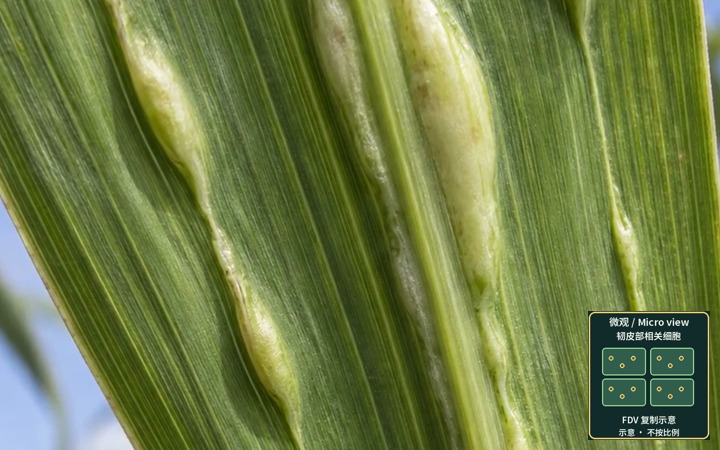
斐济病的重要线索,是叶背或中脉上的隆起瘿突。它不同于单纯黄叶,受害植株还可能矮化、叶片变短。
A key Fiji disease clue is raised galls beneath leaves or along the midrib. Beyond yellowing, plants may become stunted with shorter leaves.
来源与传播Origins & spread
病毒可随带毒种茎进入新地块,因此先追查繁殖材料。甘蔗飞虱是已证实媒介之一,取食病株后可能再传播。这里展示的是指定媒介,不代表田里所有飞虱都能传毒。看见媒介也不等于发现病毒,媒介分布和病害分布要分开。
Infected setts can introduce the virus; begin by tracing planting material. The sugarcane planthopper is a confirmed vector that can acquire and transmit it. Not every planthopper species is a proven vector. Finding the vector does not prove the virus is present.
生活史与微观过程Life cycle & microscopic processes
微观图中,病毒在相关活细胞内复制,并影响韧皮部组织。叶瘿是组织异常增生的表现,不是昆虫卵块。
The virus replicates in living cells associated with phloem tissue. Leaf galls reflect abnormal tissue growth; they are not insect egg masses.
田间检查与确认Inspection & confirmation
翻查不同高度的叶片,拍清隆起、叶脉位置和整株长势。同时记录分蘖、顶叶变形和媒介线索,避免单凭瘿突定论。发现疑似株先联系当地植保,按要求留样检测。疑似带毒材料不要再作种茎,也不要随意调往其他蔗田。
Inspect several leaf heights; photograph raised galls, veins and whole-plant growth. Record tillering, distorted tops and vectors; do not diagnose from galls alone. Contact local plant-health specialists and follow their sampling instructions. Keep suspect material out of planting stock and do not move it between fields.
预防、治理与复查Prevention, management & follow-up
种植检测合格材料,并选择当地适用的抗病品种。监测媒介和田间病株,处置方案要结合当地病害发生情况。杀虫剂不能治愈已经感染病毒的甘蔗,清除与更新另作安排。保留种源、检测和复查记录,才能减少下一季继续传播。
Plant tested material and locally suitable resistant varieties. Monitor vectors and suspect plants; adapt action to local disease conditions. Insecticides cannot cure infected cane; plan removal and replacement separately. Keep source, test and follow-up records to reduce spread into the next crop.