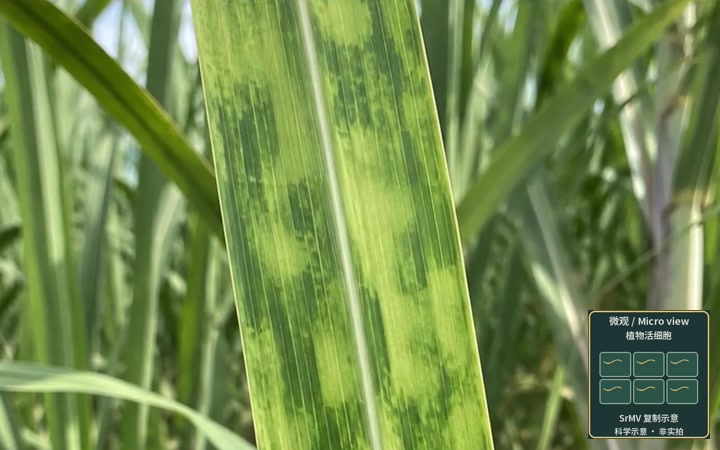
识别与危害Identification & damage
名字叫高粱花叶病毒,也能感染甘蔗,不能因为寄主名字不同就排除。叶片深浅相间的花叶只是线索,高粱花叶病毒要单独检测。
Sorghum mosaic virus can infect sugarcane too; its name does not restrict it to sorghum. Light and dark mosaic patterns are a clue; test specifically for Sorghum mosaic virus.
来源与传播Origins & spread
病毒能随着带毒种茎进入新田,外表整齐的种茎也不能保证健康。留种前核对检测记录和来源,避免把同一个病源复制到下一批苗。某些已证实的蚜虫可以非持久传毒,短暂刺探就可能参与传播。所以不能把喷杀蚜虫等同于阻断所有传播,更不能当作植株治愈。
Infected planting setts can introduce the virus into a new field; neat appearance does not prove health. Check testing records and provenance before propagation, to avoid carrying infection into the next batch. Certain confirmed aphid vectors transmit it non-persistently, during brief probes of plant tissue. Killing aphids therefore does not guarantee that all transmission stops, or cure an infected plant.
生活史与微观过程Life cycle & microscopic processes
微观示意中,病毒进入植物活细胞,利用细胞完成复制和扩展。植株中的病毒,和叶面上能看到的虫,是两个不同的治理对象。
The virus replicates in living plant cells and spreads within the plant. Virus infection within a plant and insects visible on its leaves are different management targets.
田间检查与确认Inspection & confirmation
检查新展开叶和周围植株,记录花纹、位置及种苗批次,再按要求取样。告诉检测人员需要区分哪些花叶病毒,别把所有花叶都记成同一种。
Inspect newly expanded leaves and nearby plants; record patterns, locations and seed-cane lots before sampling. Tell the laboratory which mosaic viruses need distinguishing; do not label all mosaic symptoms as one virus.
预防、治理与复查Prevention, management & follow-up
预防以检测合格的繁殖材料和当地适宜的抗病品种为基础。保留批次和田块记录;看到植株转绿,也不能直接认定已经脱毒。确诊感染后,先停止把相关植株作种,再核实周围和同批材料。依据病情与当地方案处理病株或更新田块,别依赖所谓一喷清毒。复查新生叶并结合检测结果,区分症状变化和真正的病毒状态。记住三件事:查清病毒、守住种源、管理传播,再安排下一季。
Base prevention on tested planting material and resistant cultivars suited to local conditions. Keep lot and field records; a return to green leaves alone does not prove virus elimination. After confirmation, stop using affected plants for propagation and check nearby plants and related lots. Manage affected plants or renew the field as locally advised; do not rely on a supposed virus-clearing spray. Inspect new leaves and use test results to distinguish symptom changes from actual infection status. Before the next crop, identify the virus, safeguard planting material and manage transmission.