识别与危害Identification & damage
宿根矮化病可能没有醒目的外部症状,长得高也不能排除。田间长势不齐值得调查,但缺水缺肥也可能造成矮化。
Ratoon stunting can lack obvious signs; tall cane may still be infected. Uneven growth needs investigation, but water or nutrient stress can also stunt cane.
来源与传播Origins & spread
致病细菌可随带菌种茎进入新田,并在宿根中延续。切过病蔗的刀具和收割设备,又可能把它带到下一株。
The bacterium can enter with infected setts and persist in ratoons. Contaminated cutting tools and harvesters can carry it to another plant.
生活史与微观过程Life cycle & microscopic processes
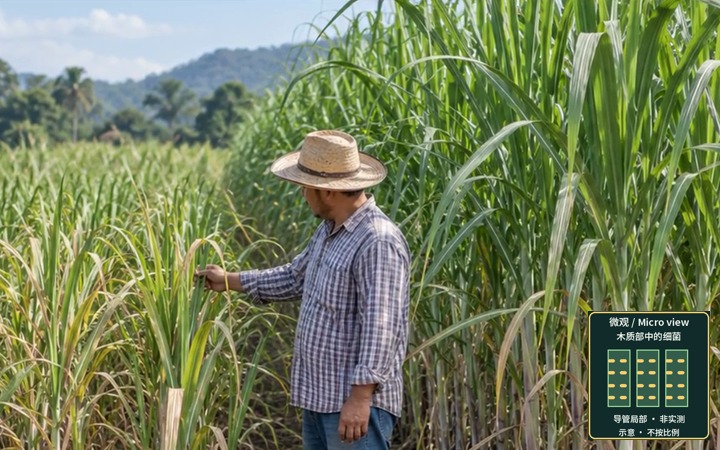
微观示意中,细菌位于输水的木质部导管内。感染会影响生长,干旱条件下损失可能更明显。剖开茎节时有时可见变色,但这些表现并非确诊依据。不要把矮化等同于正常宿根衰退,也不要只靠加肥处理。
The bacteria colonise the water-conducting xylem. Infection affects growth; losses may become more evident during drought. Discolouration may occur inside nodes, but it cannot confirm the disease. Do not assume normal ratoon decline or rely on extra fertiliser.
田间检查与确认Inspection & confirmation
先联系检测机构,按其要求选择蔗龄、部位和样本数量。样本分袋标记地块与种源,检测可用经过验证的分子方法。
Ask the testing service which plant age, tissue and sample number it needs. Label samples by field and seed source; validated molecular tests can detect infection.
预防、治理与复查Prevention, management & follow-up
检出后追溯种茎去向和机械作业路线,排查关联田块。已受感染材料不再留种,更新方案由当地技术人员制定。预防重点是检测合格种源,以及切种和收割设备卫生。先清除泥土残渣,再按有效程序消毒,不能只冲一下水。种茎热处理必须使用当地验证方案,温度时间不能随意套用。保存检测和作业记录,复查种苗圃,才能发现再次带菌。
After detection, trace planting cane and equipment movements to linked fields. Do not retain infected seed cane; plan renewal with local specialists. Prevention centres on tested planting stock and clean cutting equipment. Remove soil and debris before validated disinfection; a quick rinse is insufficient. Seed-cane heat treatment needs a locally validated temperature and duration. Keep test and equipment records and retest seed nurseries for reinfection.