识别与危害Identification & damage
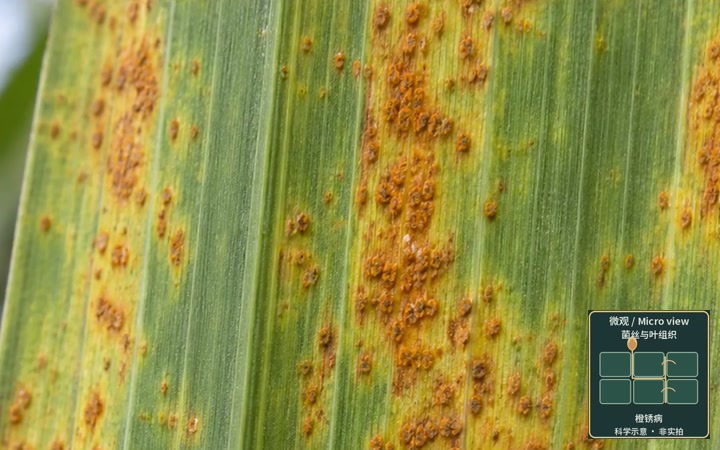
叶背出现橙色到橙褐色小疱,连成片时,绿叶可能提前干枯。橙锈病由另一种真菌引起,要与褐锈病分别辨认和记录。
Orange to orange-brown pustules underneath leaves can merge and contribute to premature leaf death. Orange rust has a different fungal cause from brown rust; identify and record them separately.
来源与传播Origins & spread
病叶上的孢子随风或雨传播,新的侵染还需要适宜温度和叶面湿润。即使没有下雨,夜间露水也可能让叶面湿润,巡查不能只看降雨。
Spores spread by wind or rain; new infection also needs suitable temperatures and leaf wetness. Even without rain, overnight dew may wet the leaves, so scouting should not depend on rainfall alone.
生活史与微观过程Life cycle & microscopic processes
微观示意从孢子到叶内侵染,再到新锈疱,展现重复感染的循环。它不是虫卵孵化,也不是根里冒出铁锈;病原在叶组织中发展。孢子的形状和壁结构能帮助鉴别,橙锈孢子常见顶端壁增厚。仍有疑问时做针对性检测,不能仅凭肉眼把两种锈病分开。
Spores infect leaves, where the fungus develops and forms new pustules. These release spores that can start further infection cycles. Spore shape and wall structure help identification; orange rust spores commonly show an apical thickening. Use targeted testing when uncertain; unaided visual inspection cannot always separate the two rusts.
田间检查与确认Inspection & confirmation
在多个田点翻看叶背,记录新锈疱、受害面积,以及品种和叶龄。暖湿时仍要持续巡查,具体高风险季节,应以当地监测为准。一个品种抗褐锈,并不代表它也抗橙锈,选种时要分别核对。采用当地推荐的抗病品种,并持续观察原本抗病的品种是否出现新症状。
Inspect leaf undersides across the field; record new pustules, affected area, cultivar and leaf age. Continue scouting in warm, humid conditions; use local monitoring to identify high-risk periods.
预防、治理与复查Prevention, management & follow-up
需要用药时,结合早期病情和当地建议,及时保护仍然健康的叶片。只使用当地登记方案,遵守标签和抗性管理要求,不自行加量加频次。治理后看新叶和新锈疱的变化,不用旧病斑是否消失判断成败。将诊断、品种和复查结果连起来,才能逐步降低下一轮侵染风险。
Resistance to brown rust does not guarantee resistance to orange rust; check both when selecting cultivars. Choose locally recommended resistant cultivars and monitor them for newly appearing disease. When fungicide use is justified, act on early disease information to protect remaining healthy foliage. Follow a locally registered programme, label directions and resistance guidance; do not improvise rates or frequency. After management, assess new leaves and pustules; disappearance of old lesions is not the success measure. Link diagnosis, cultivar choice and follow-up observations to reduce the risk of subsequent infection.