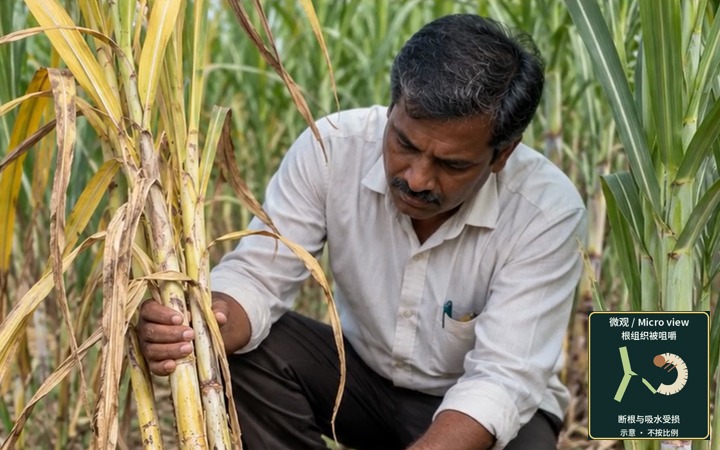
识别与危害Identification & damage
甘蔗成片发黄、易倒,先挖开根区,别只往叶上找虫。本片以印度记载的这一种蛴螬为例,白色幼虫还需鉴定。
Yellowing patches and canes that loosen or lodge easily warrant inspection of the root zone. This guide focuses on H. consanguinea, a sugarcane pest reported in India. Pale grubs still require species identification.
来源与传播Origins & spread
雨后要留意田边树上的金龟子,成虫活动提示检查时机。树上见虫不是蔗根受害的证明,还要核对地下活虫。
Watch nearby trees after rain; beetle activity can guide scouting. Beetles on trees do not prove root damage; inspect below ground.
生活史与微观过程Life cycle & microscopic processes
雌虫在土中产卵,卵留在小土室里,不在叶上排成卵块。孵化后是弯成C形的幼虫,头较硬,胸部有三对足。幼虫在根区取食,长大后在土室中化蛹,再羽化成虫。不同虫态所在位置不同,一次浅挖可能漏掉较深的蛹。微观小图显示根组织被咬断,吸水能力随根系损伤下降。干旱、积水和其他根病也会萎蔫,要比较根部实际损伤。
Females lay eggs in soil cells, rather than masses on leaves. Hatching produces C-shaped grubs with a firm head and three leg pairs. Grubs feed around roots, pupate in soil, then become beetles. Stages occupy different positions; shallow digging can miss deeper pupae. Chewing damage reduces functional root tissue and can impair water uptake. Drought, waterlogging and root disease also wilt cane; compare damage.
田间检查与确认Inspection & confirmation
在受害区和邻近正常区,用相同面积和深度挖土记录。同时记下活幼虫、断根、土壤水分,留取标本确认虫种。
Sample affected and nearby normal areas using consistent dimensions. Record live grubs, severed roots and moisture; retain identification specimens.
预防、治理与复查Prevention, management & follow-up
有发生史的田块,收后整地和下一季种植要提前安排。成虫监测与田间处理结合,生防产品须适配虫种和土壤。需要药剂时按当地登记与指导使用,不能照搬外地配方。处理后重查活幼虫、新根和出苗,不能只看表面变绿。
Plan post-harvest cultivation and replanting for previously affected fields. Combine adult monitoring with field action; match biocontrol to local conditions. Use locally registered treatments and advice, not imported recipes. Recheck live grubs, new roots and emergence, not greening alone.